
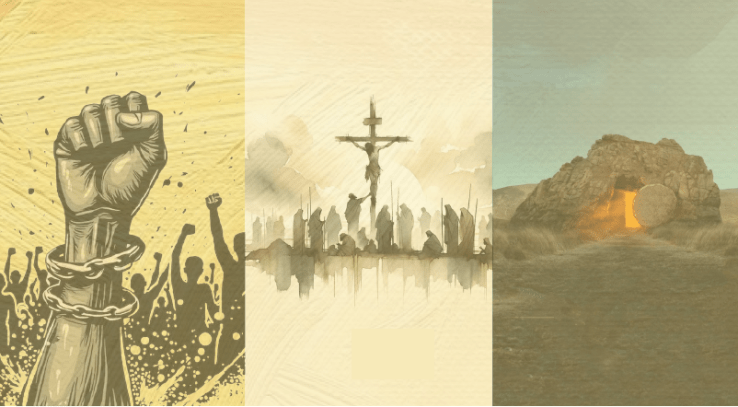
We often think of God’s justice in terms of weighted scales. We assume that if we do enough good, it will outweigh the bad we have done. We convince ourselves that as long as we live our lives as decent people and avoid getting caught on the wrong side of the law, we are safe. We hope that, in the end, the scales of our lives will somehow balance out and that God will overlook our mistakes. But if we are truly honest with ourselves, we know that the wrong things we have done aren’t just a series of mistakes. They reflect a deeply ingrained rebellion against the One who created us. The Holy Bible calls this ‘sin’ and declares that “there is no one righteous, not even one”. Before a holy, just, and righteous God, we stand totally depraved and spiritually bankrupt. We cannot pay the debt we owe Him on account of our sin. On the Day of Judgment, we will stand condemned.
In the midst of this hopelessness, the Holy Bible provides hope. God demonstrates His love for us when He says this concerning Jesus Christ, His beloved Son:
He was delivered over to death for our sins and was raised to life for our justification – Romans 4:25
Why did Jesus die? Or rather, who was responsible for Jesus’ death? When we read the four gospel accounts from the Holy Bible, we understand that Jesus’ close friend Judas Iscariot betrayed Him, the unbelieving Jews handed Him over to the Romans, and the Roman governor Pontius Pilate finally sentenced Him to be crucified. But the Holy Bible also reveals that God sovereignly controlled all these events to accomplish His eternal plan. It was God who delivered His own beloved Son to die a painful death. But why? Because of our sins.
Because God is perfectly just, He cannot simply overlook sin. That would make Him an unjust Judge. The penalty for our rebellion against Him is eternal condemnation and death. But in an act of unfathomable love, Jesus took our place. He was delivered to the cross not for any crime of His own, for He was the only perfect and sinless man to ever live. But as our substitute, Jesus took on the penalty that was meant for us. He paid the debt He didn’t owe because we owed a debt we could never pay.
If the story had ended with Jesus’ death, we would still be in doubt. How would we know if His sacrifice was enough? How would we know if God had accepted the payment? The second half of the verse dispels these doubts: He was “raised to life for our justification.” The resurrection of Jesus is the proof that our debt has been paid in full. When God raised Jesus from the dead, He displayed to the entire world that the sacrifice of His Son, Jesus Christ, is sufficient to cover every single one of our sins. We don’t need to do anything to earn God’s favour, other than to believe in His Son.
“Justification” means more than just being forgiven; it means being declared righteous. The same God who declared that “there is no one righteous” also declares us as perfectly righteous if we believe in what He has done through the death and resurrection of Jesus Christ. Here is the divine transaction: Jesus took our sin so that we could receive His righteousness. That is the “Gospel” or the good news of Jesus Christ. The message isn’t “Work harder and get better.” The message is “believe in God’s finished work.” We cannot earn our way to God. It is God who condescended and made amends on our behalf. He is the One who declares us righteous and guilt-free in and through His Son.
Do you recognize that your own efforts to be good enough are failing? Do you feel the weight of your sins? God’s gracious offer is available for anyone who turns to Him. All that is required is that you stop trusting in your own efforts and place your trust in the finished work of Jesus. You don’t have to live in fear of judgment anymore. You can live in the freedom of being loved and accepted by God. Will you take Him at His word? Would you believe in the divine transaction?

